
Show the work. Explain the scope.
Start with the decision the customer is trying to make, then build the page around useful answers.
- Group services by the projects the business actually delivers.
- Explain design, approvals where applicable, installation, and maintenance responsibilities.
- Give project images context: the customer goal, the scope, constraints, and what the business delivered.
Use proof that belongs to the business.
Images should show work you can identify and have permission to publish. Do not imply rebate eligibility, water savings, or permit approval without checking current requirements.
Try this
Choose one real project or service example. Explain the customer need, what your business did, and what a future customer should understand.
Keep the first inquiry proportionate.
Ask for enough context to route the request. Save detailed or sensitive information for the appropriate follow-up.
- Is this maintenance, a new installation, or a redesign?
- What is the project area and desired outcome?
- What budget or timing range is useful at the first conversation?
Test the actual contact path on a phone and with a keyboard. A visually convincing form is not evidence that a request reaches the business.
Study the design choices.
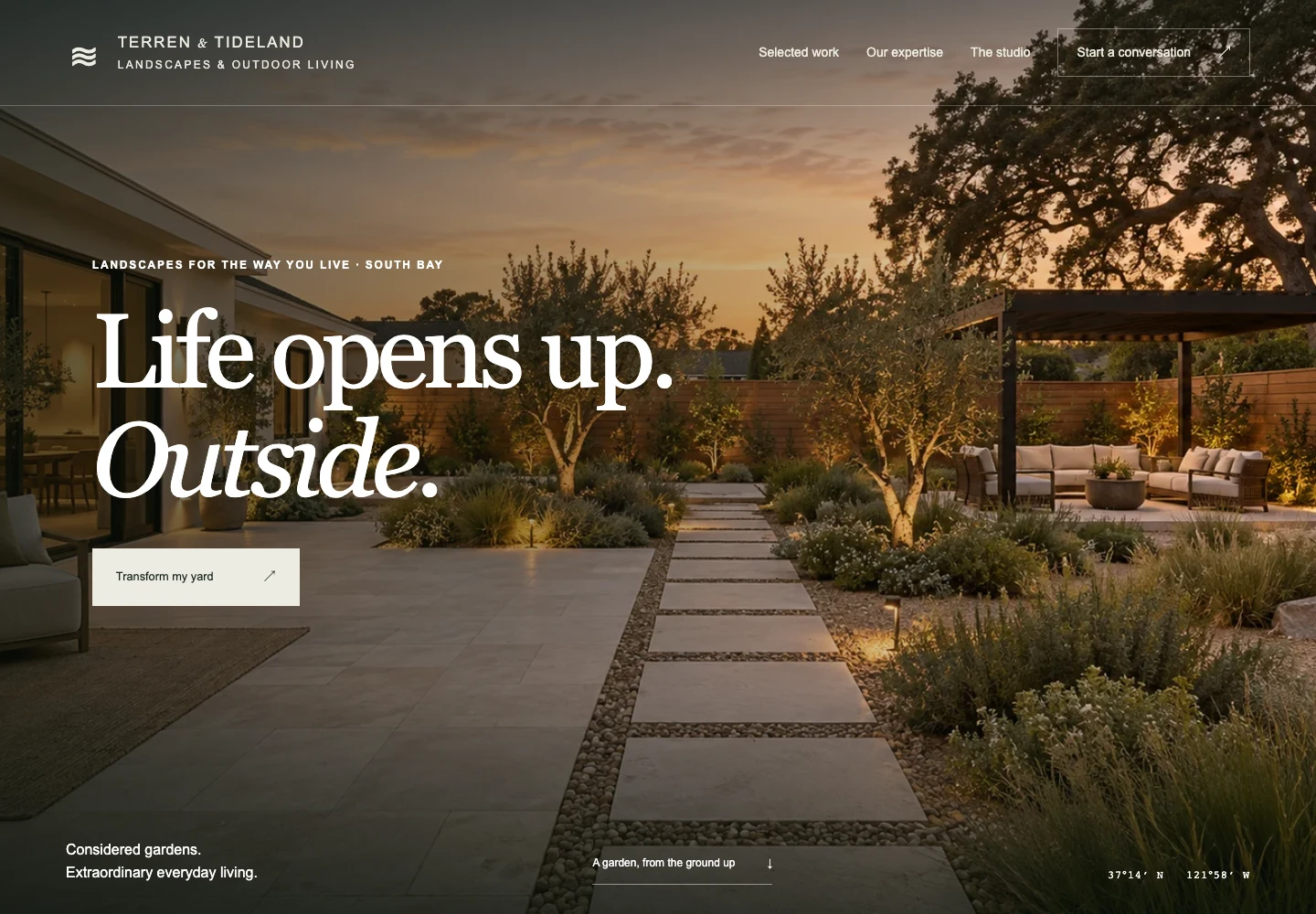
This is a fictional concept, not verified client work or a performance result.
Read the annotated landscaping business example