Start with the customer’s comfort problem.
A homeowner may know that the house is too warm without knowing which equipment or service is involved. Another may be comparing replacement systems. Organize the website around repair, installation and maintenance, then guide people toward the right conversation.
What your website should make clear.
Repair, replacement and maintenance
Explain each service in plain language. List heating and cooling systems only when you actually work on them, and distinguish a repair inquiry from a replacement consultation.
A useful first contact
Let customers describe the symptom and select a service category. A guided diagnostic or interactive comfort tool can be scoped separately; the site should not suggest that a form replaces an on-site assessment.
Honest seasonal messaging
Make heating or cooling information easy to find when relevant, while keeping the complete service offering accessible. State emergency availability only if the business provides it.
Equipment and service-area details
Describe supported equipment and the areas you serve. Publish manufacturer relationships, financing offers or rebate details only when confirmed and current.
Trust starts with the truth.
Use actual installation photos, verified credentials and a clear explanation of what happens after an inquiry. Avoid guaranteed energy savings or unsupported performance claims; recommendations depend on the property and system.
The ideal next step: Request heating or cooling service.
Build the contact flow around how your business actually handles new work.
A direction to explore.
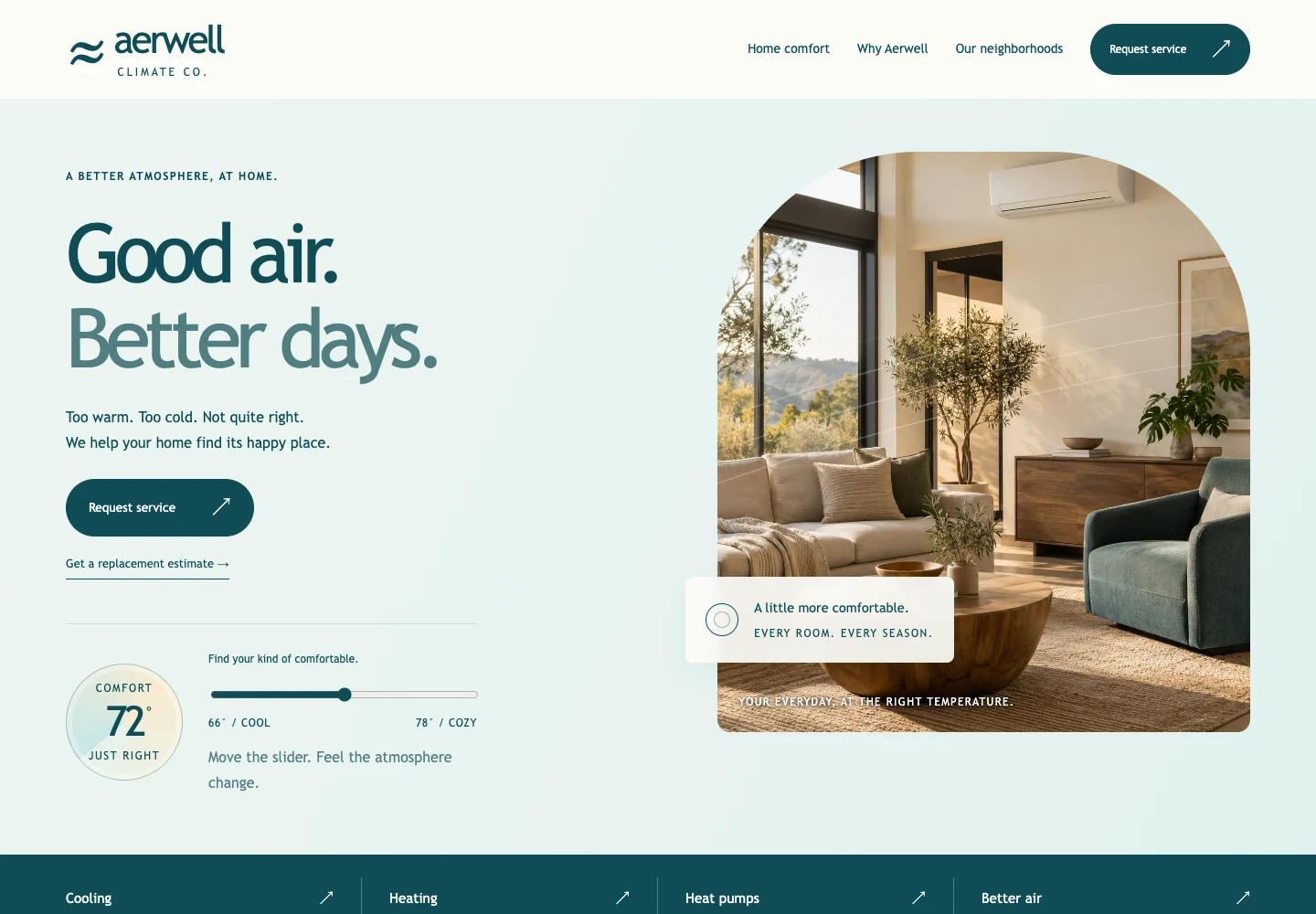
A clear, comfortable experience built around the homeowner’s heating and cooling needs.
Concept website, not a client project. Demo names and any reviews are fictional. Demo forms do not send service requests. Advanced interactions are quoted separately.
Your business website, built for $1,500.
The base offer includes professional design, responsive business and service pages, contact forms, a technical search foundation and source-code ownership. We tailor the agreed pages to your services, brand and customers.
Domain, hosting and additional functionality are separate. We’ll confirm the exact scope before your project begins. Read everything included in the price or start your hvac website.
Questions for hvac businesses.
Can separate pages explain heating and air conditioning?
Yes. Distinct pages can answer different service questions. We’ll agree on the services and page count before work begins.
Can customers request a maintenance visit?
Yes. A contact form can collect the request. Automated scheduling, reminders or subscription management need additional scoping.
Can we advertise financing or rebates?
Only with accurate, current details supplied by your business. Those offers can change, so plan who will keep the information up to date.
Serving local customers.
Make your genuine service area easy to find and keep your business information consistent. DPS Labs serves San Jose and South Bay businesses as well as companies throughout the United States. Useful service information matters more than a collection of pages with city names swapped in.
Compare all five website examples to see other approaches to clear services and contact actions.